Case Study: CreatorOS
Designing a workspace-first AI creator studio that prioritizes flow over dashboards
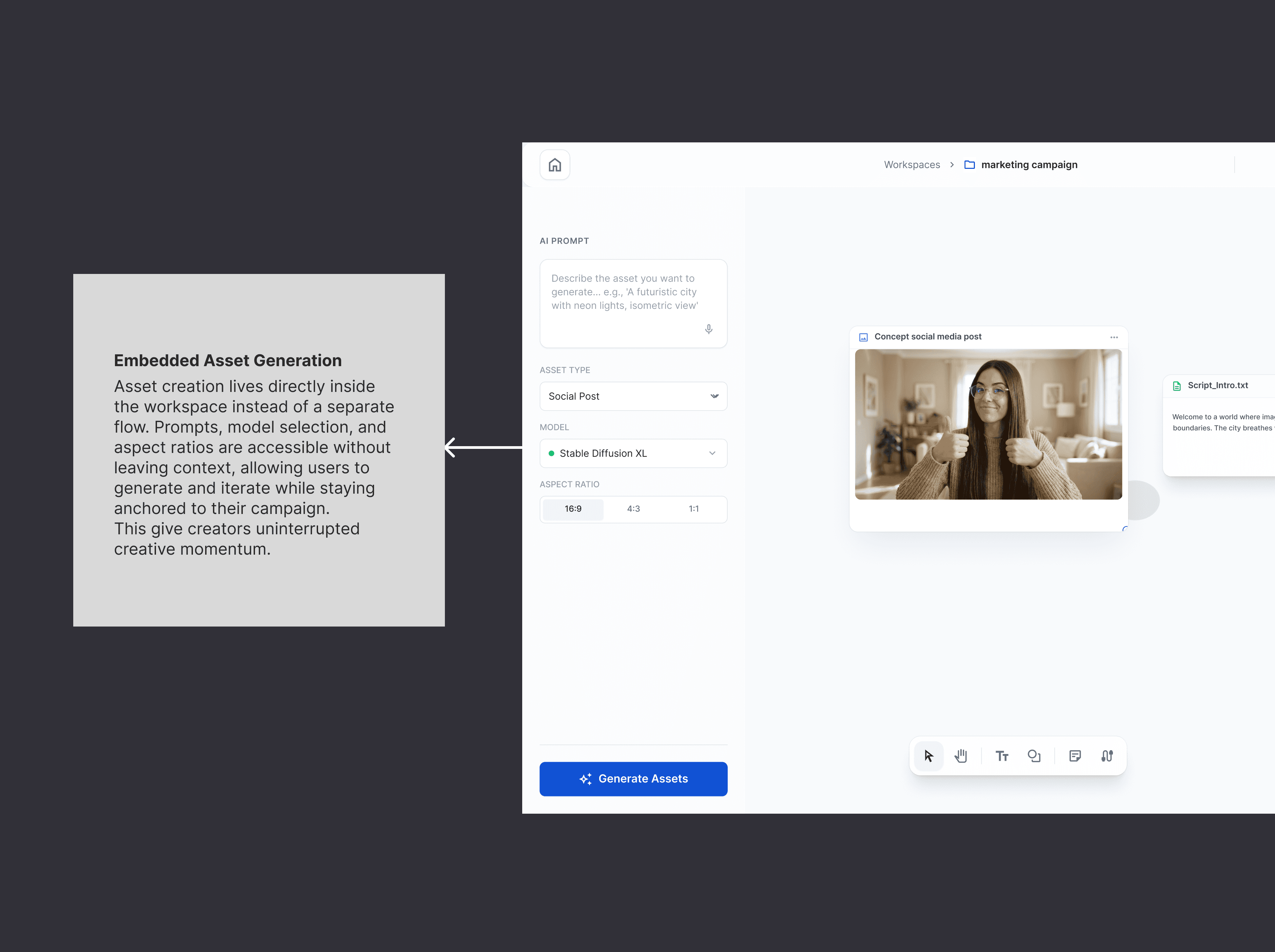
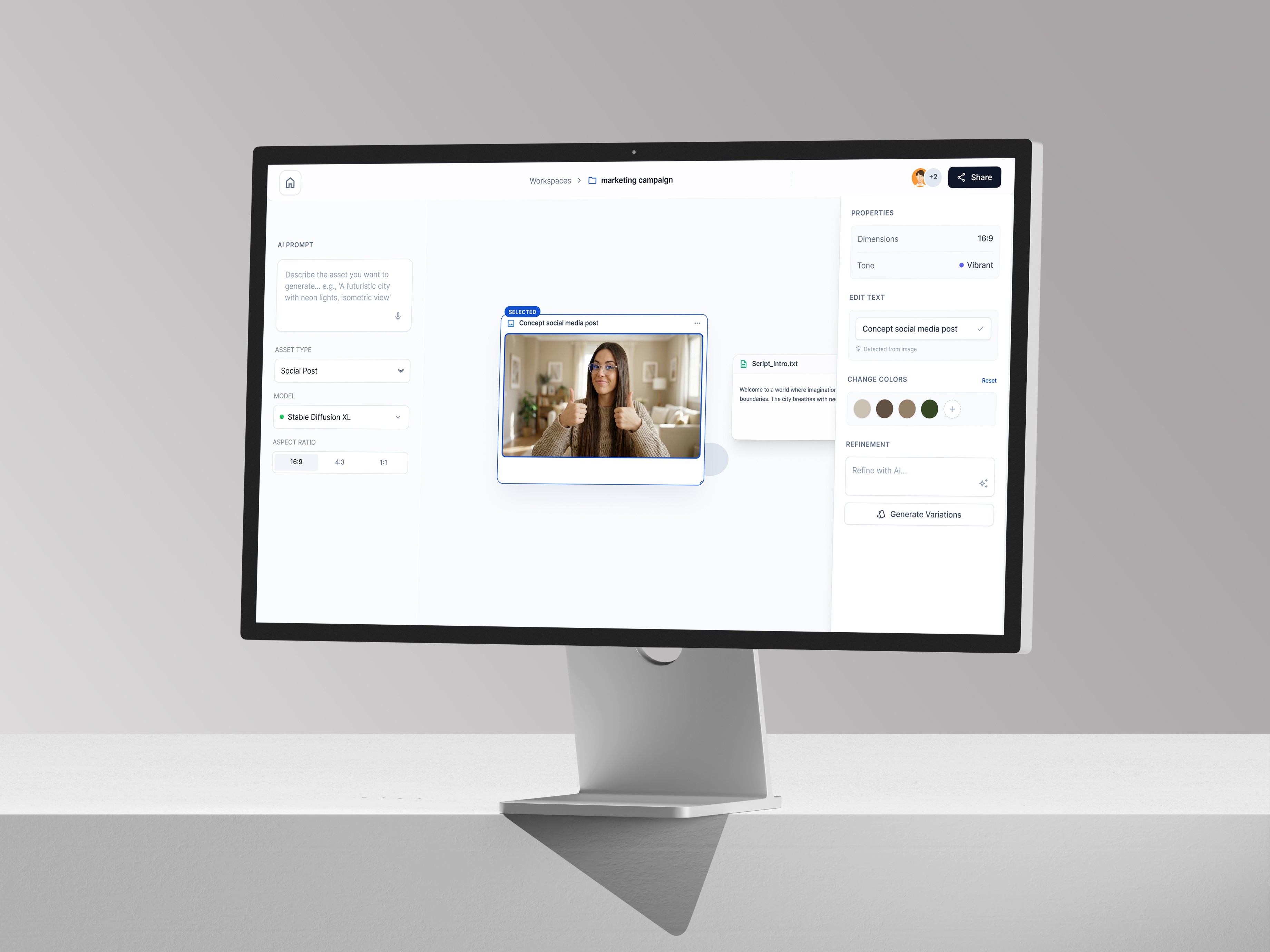
CreatorOS is an AI-powered creator studio designed around a workspace-first model, where assets are generated, refined, and exported within a single project environment.
Role
Product Designer
Tools
Figma Miro
Industries
Saas
Date
October 2025
Problem & Context
Creators often rely on disconnected tools to generate content, manage assets, edit variations, and export final outputs. While AI has accelerated content creation, it has not solved the fragmentation of the creative workflow itself. This results in frequent context switching, broken creative momentum, and poor visibility into how assets evolve within a project. The goal was to design a system that supports the full lifecycle of creative assets while keeping creators focused on execution.
The Product : A Workspace-First Tradeoff
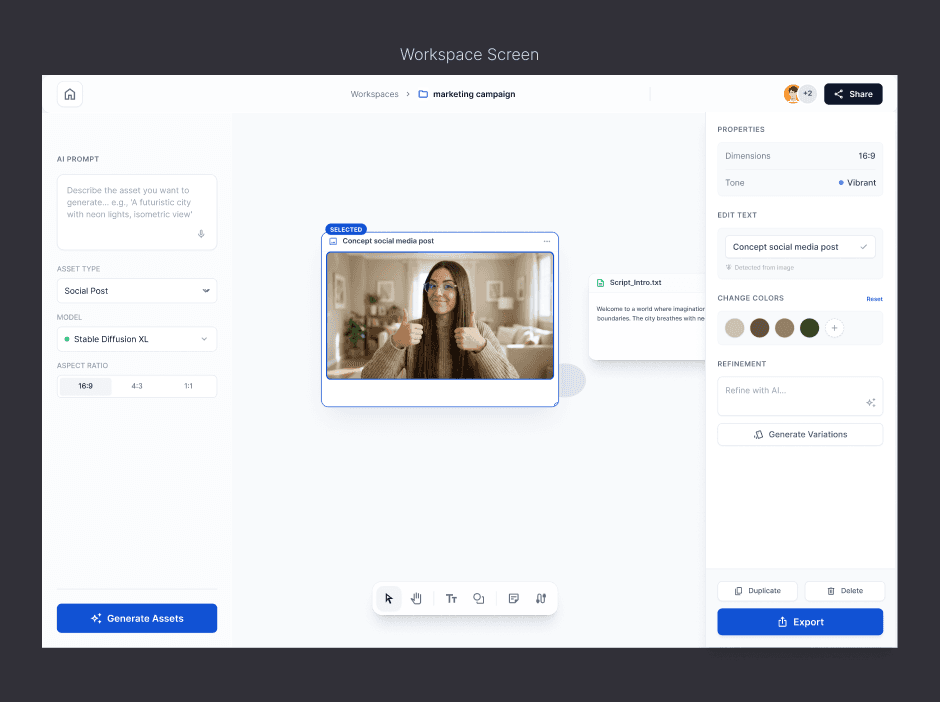
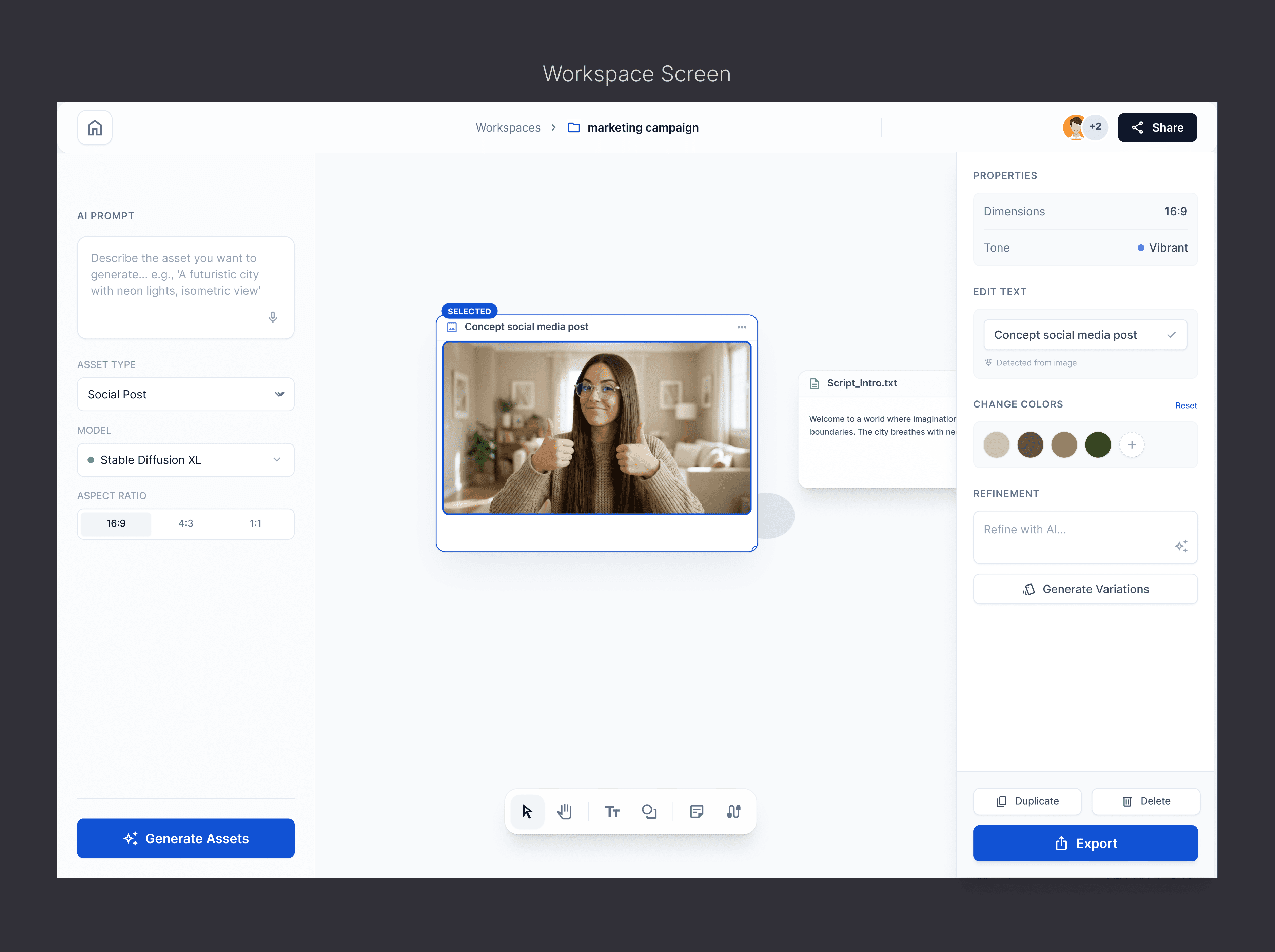
CreatorOS was designed around a workspace-first model, where asset generation, iteration, and export happen in a single environment. Instead of making a content library or dashboard the primary surface, the workspace becomes the center of gravity. This decision trades interface simplicity for creative continuity: while the workspace carries more responsibility, it eliminates the need for creators to jump between screens during active work.
System Structure & Asset Flow
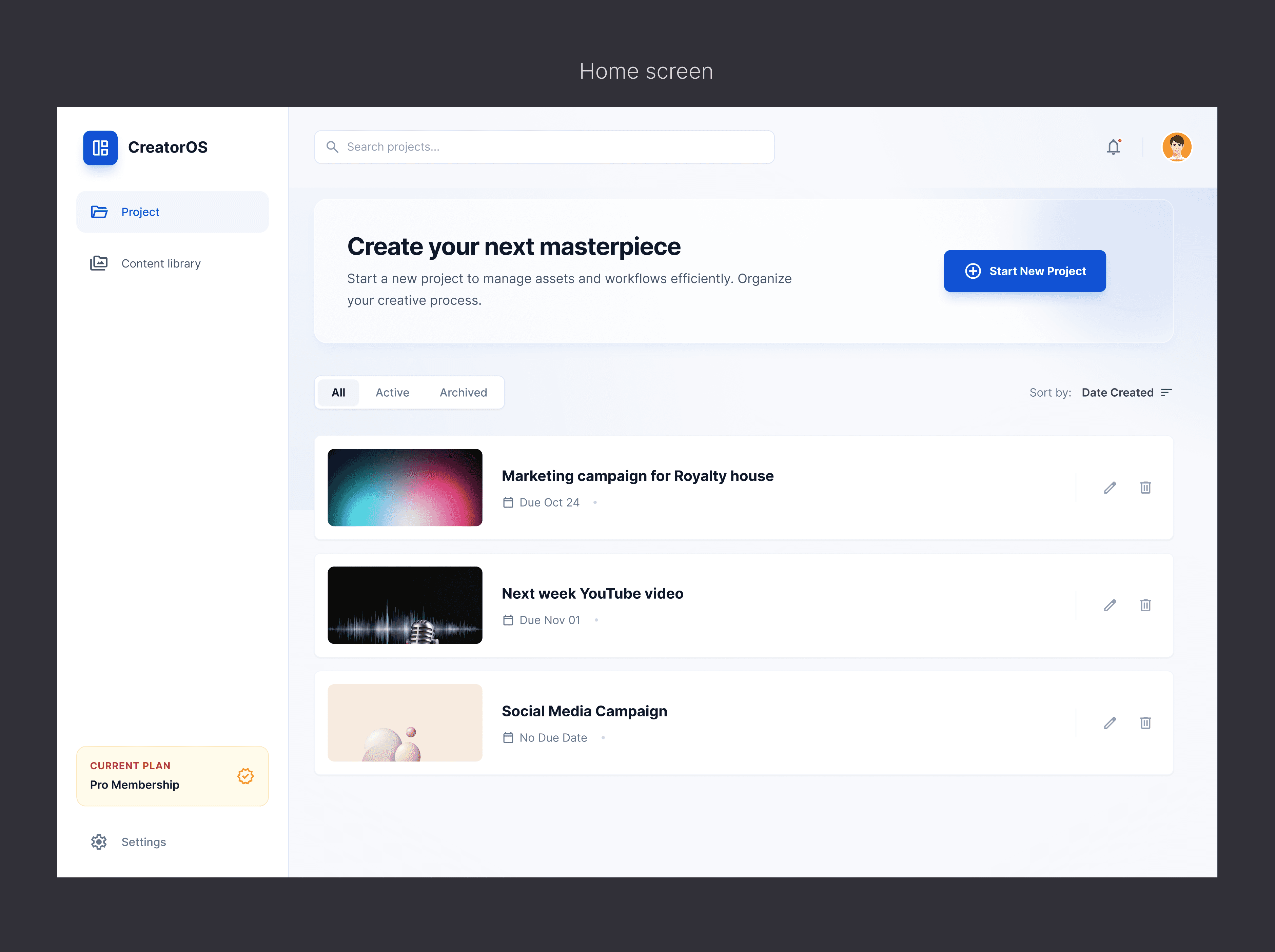
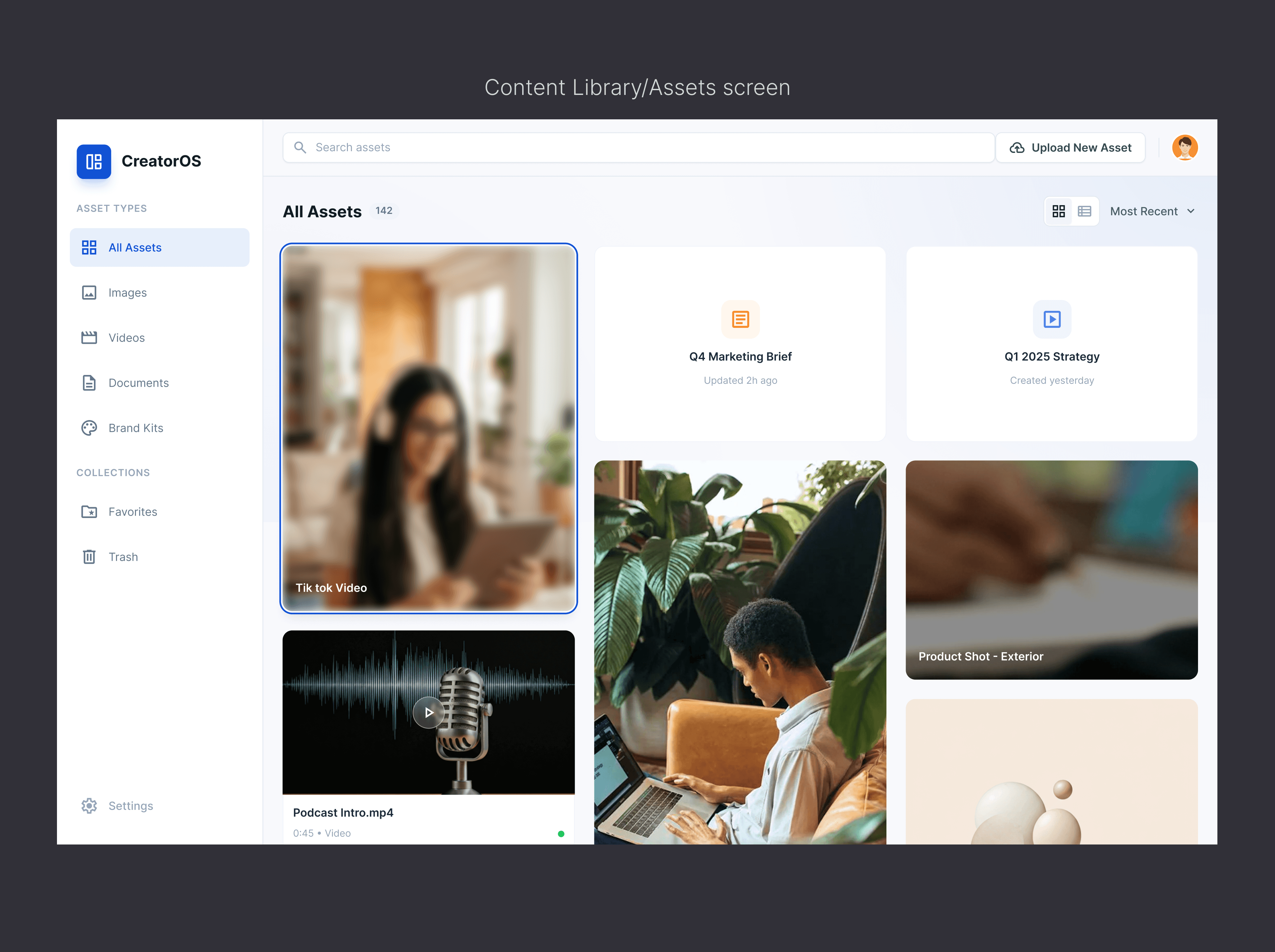
The product is structured across three layers: Projects, Workspace, and Content Library. The Projects screen supports high-level organization and ownership, while the workspace handles creation and iteration. All assets generated within a workspace automatically sync to the Content Library, which functions as a passive system layer for reuse and discovery. This trades immediate visibility for long-term scalability, ensuring the library supports the workflow without competing with it.
Asset-Level Decisions & Reflection
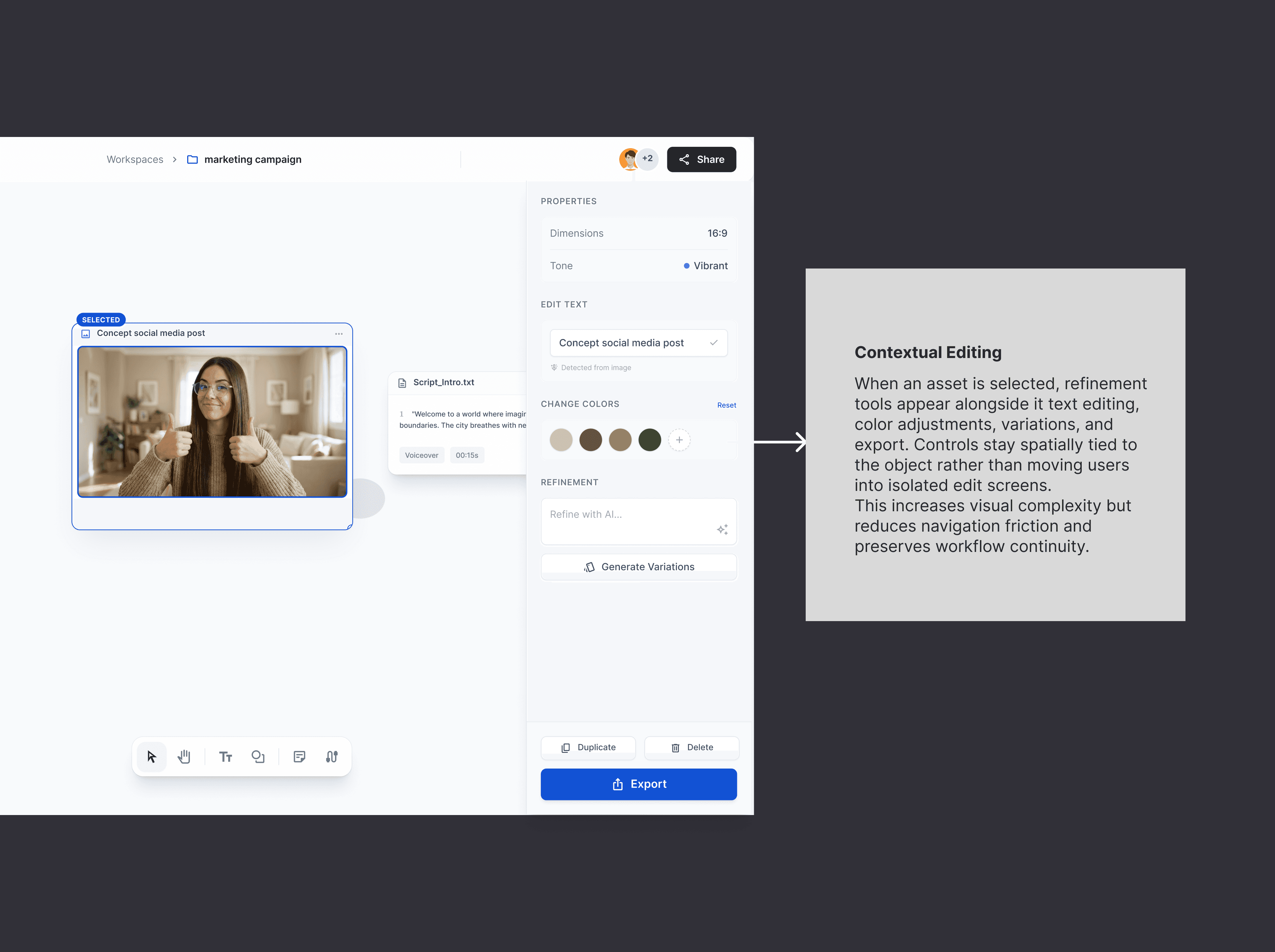
Rather than moving users into separate edit or export screens, asset interactions are handled through a contextual property panel. This decision prioritizes speed and spatial continuity, while accepting a denser interface that requires careful hierarchy and defaults. Overall, the design favors flow over fragmentation, creating a foundation that can scale to features like version history, collaboration, and smarter asset grouping.