Case Study: STITCHED
A Modern Knitwear Commerce Experience
STITCHED is a mobile e-commerce concept focused on premium knitwear essentials. The project explores how a restrained, confidence-driven shopping experience can support considered purchases in a category where users often hesitate due to uncertainty around fit, material quality, and longevity. The goal was to design a commercially viable product experience that prioritizes clarity and trust over urgency and promotion.
Role
UI/UX Designer
Tools
Figma
Industries
E-commerce
Date
January 2025
Overview
The fashion e-commerce space is dominated by experiences that overwhelm users with aggressive discounts, crowded layouts, and excessive choice. While this can drive short-term engagement, it often erodes trust and leads to decision fatigue, particularly for higher-quality garments. From a business standpoint, this results in low product page conversion, high cart abandonment, and reliance on price incentives. From a user perspective, it creates uncertainty and friction at key decision points. STITCHED was designed to address these issues by presenting knitwear as a considered purchase rather than an impulse buy, balancing user confidence with commercial performance.
The Process
The design process began with defining a clear product position: a premium knitwear brand focused on timeless essentials rather than trend-driven fashion. This positioning informed all subsequent decisions, from visual restraint to content hierarchy. I mapped the end-to-end purchase journey, identifying moments where users typically lose confidence or abandon the flow, particularly during browsing and checkout on mobile. Rather than solving every edge case upfront, the process prioritized strengthening the core purchase funnel. Key decisions were evaluated through the lens of reduction, predictability, and trust, ensuring that each screen supported user intent without introducing unnecessary cognitive load.
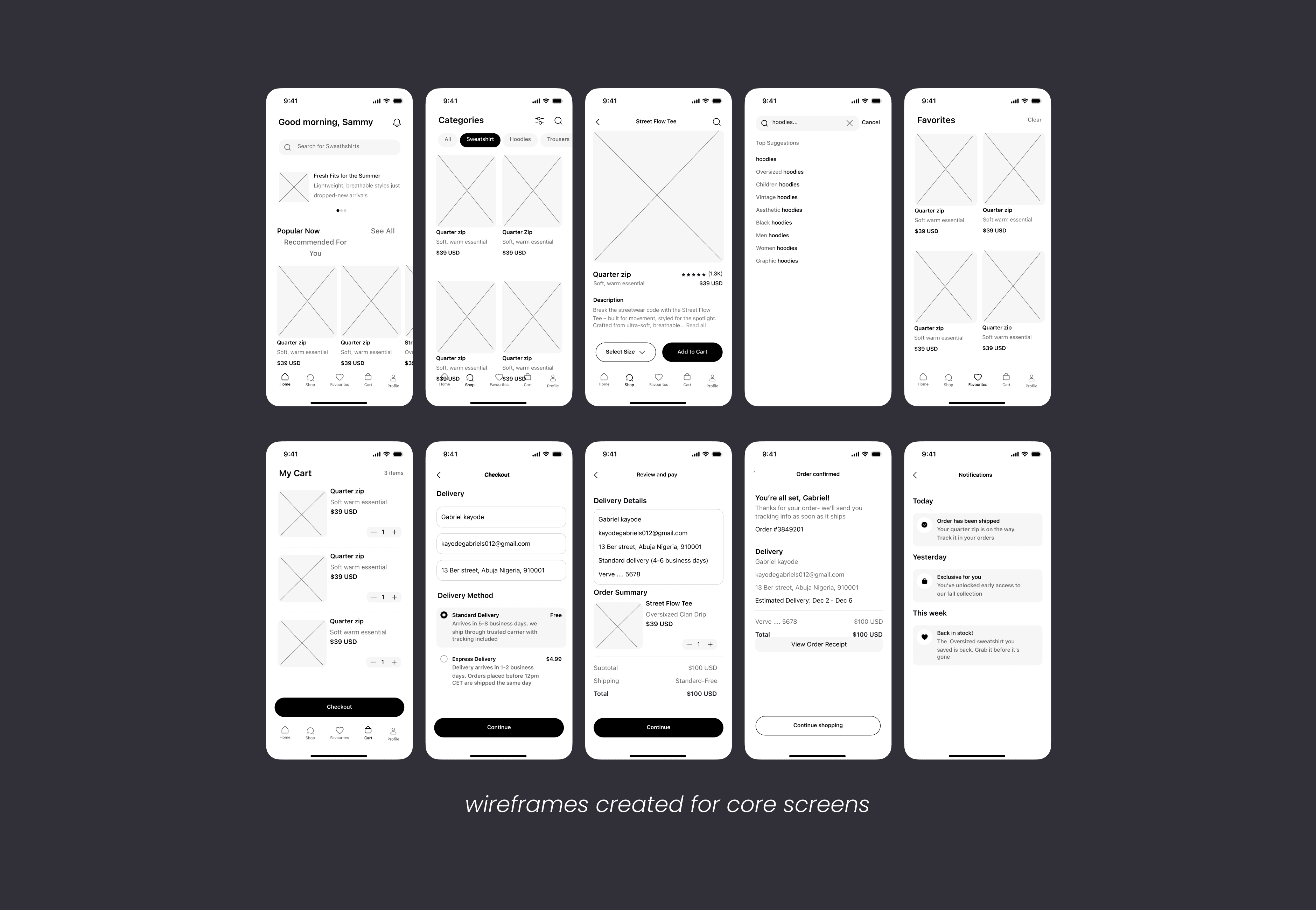
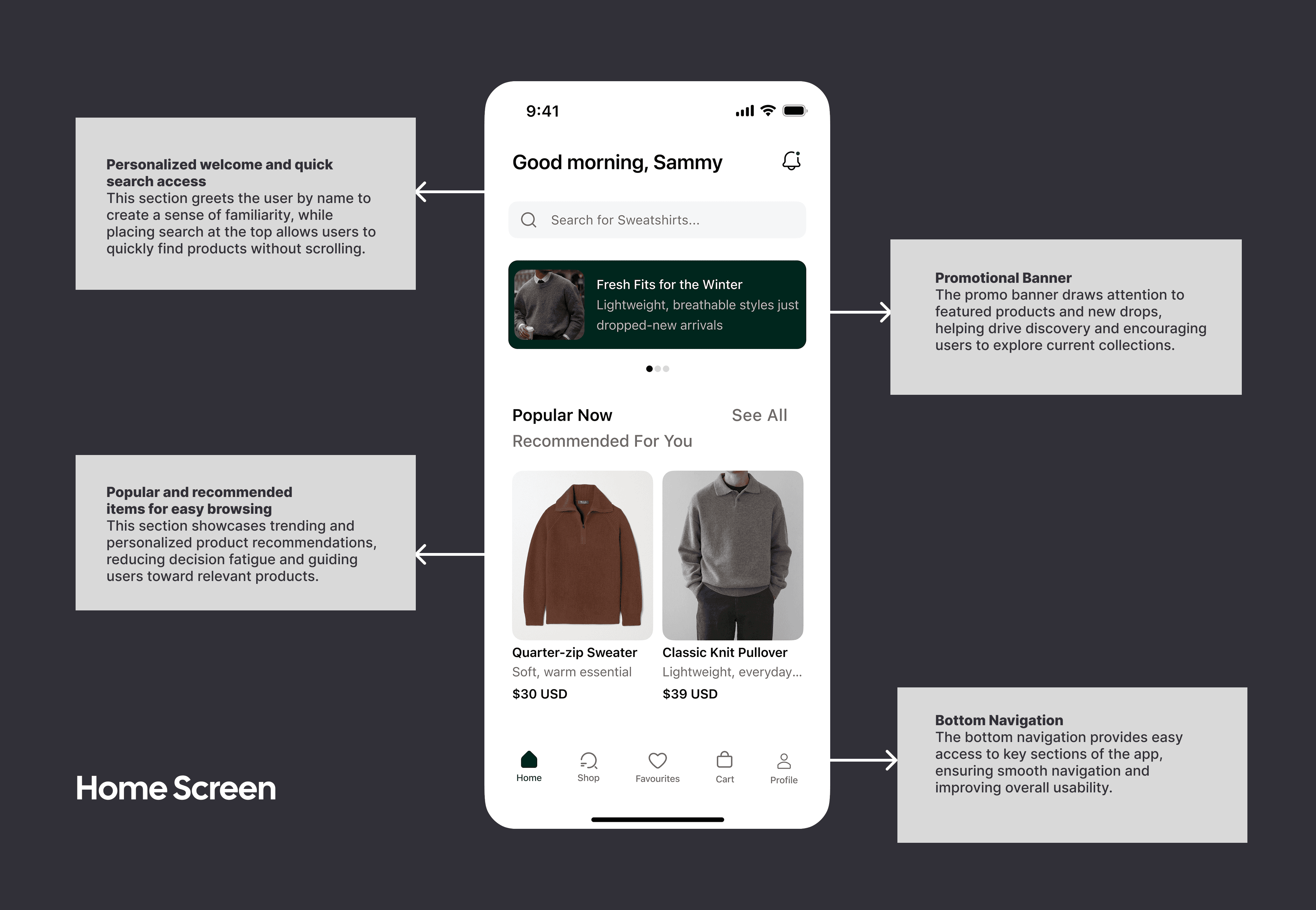
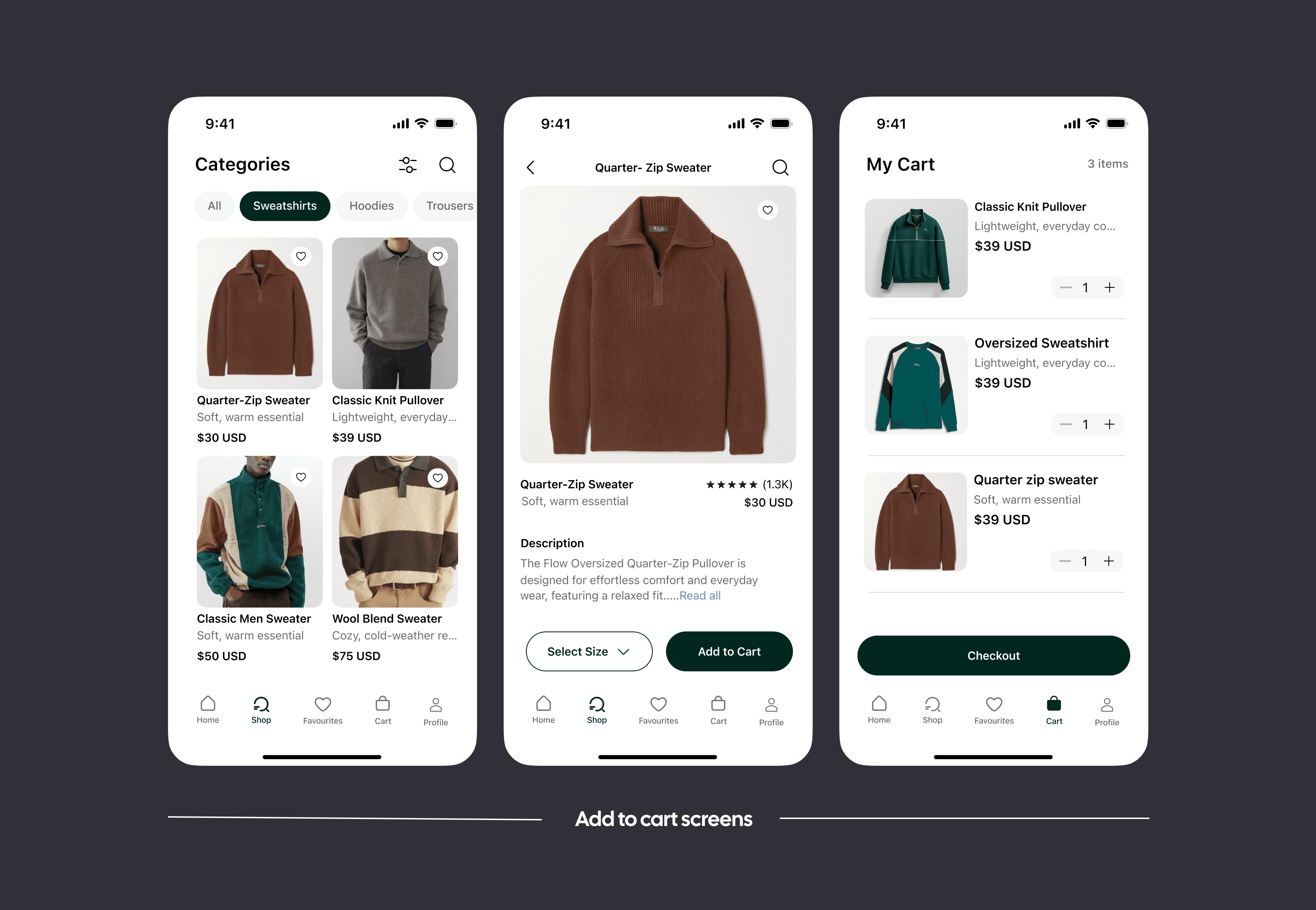
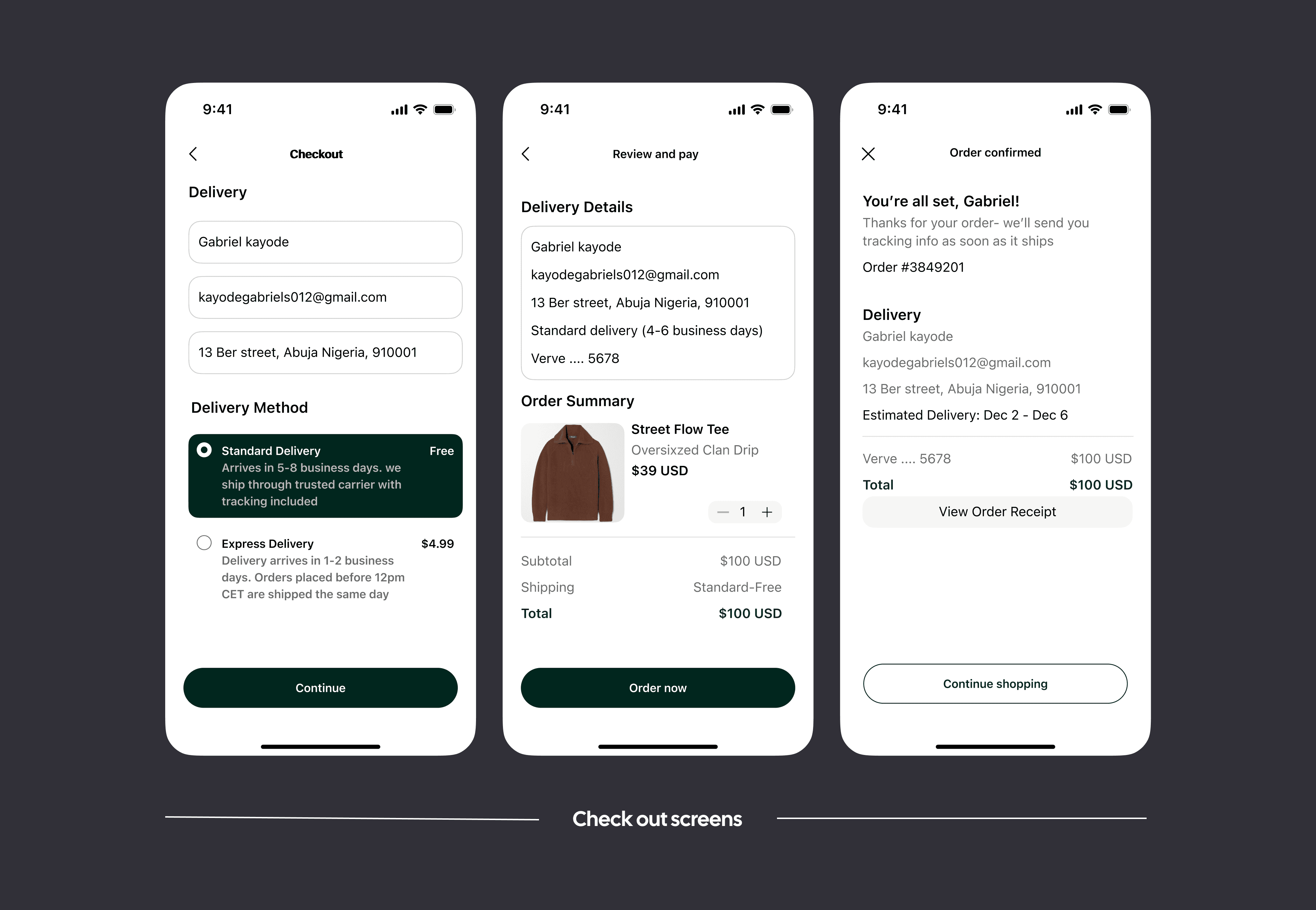
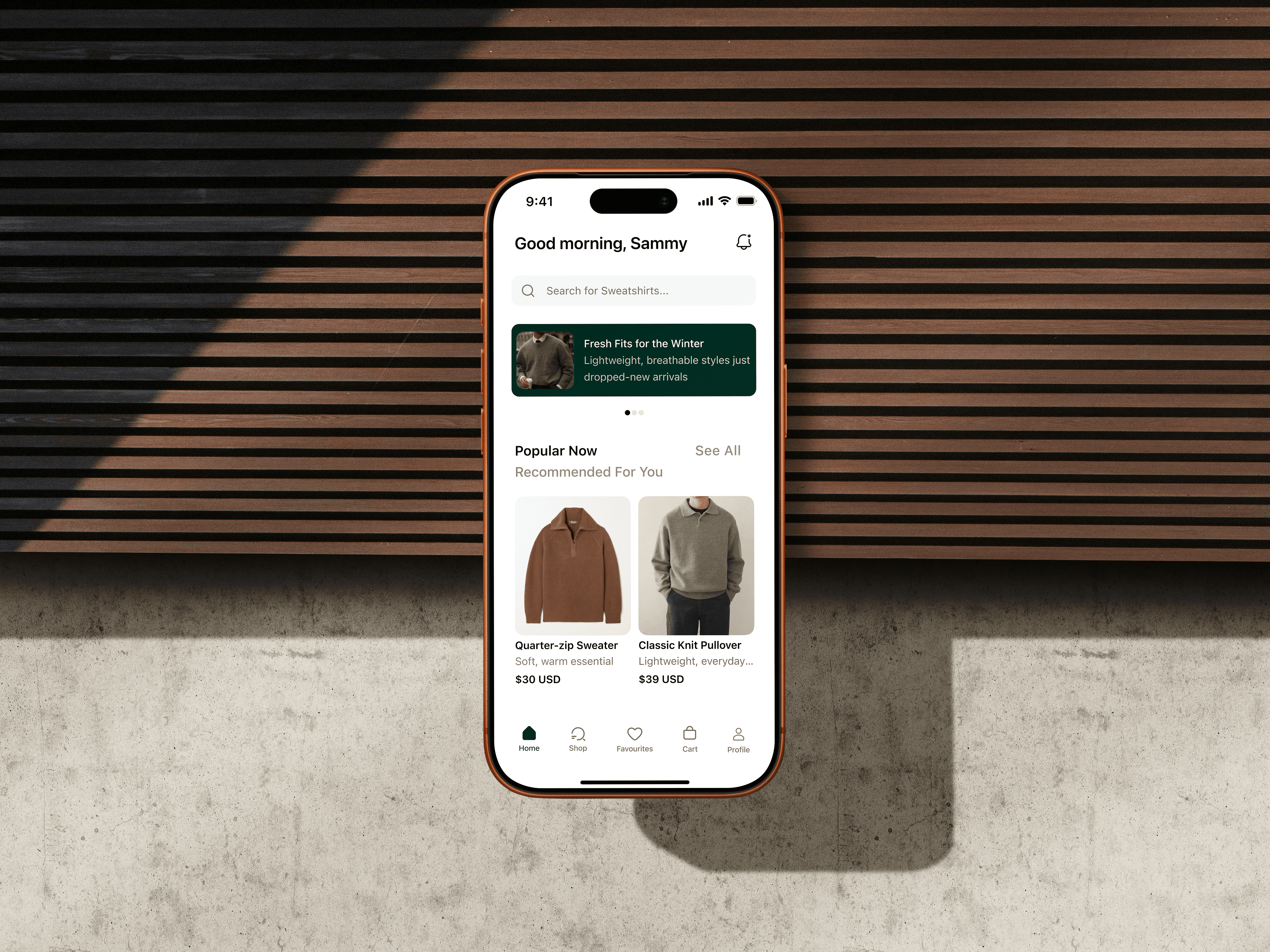
The final interface reflects a curated, minimal approach across the experience. The home screen functions as an intentional entry point rather than a full catalog, emphasizing controlled product exposure, clear category access, and a prominent search for high-intent users. Instead of leading with promotions, the experience highlights popular products to provide social proof without devaluing the brand. Product cards remain visually simple to avoid distraction and encourage deeper engagement at the product detail level. Navigation is limited to core user intents, and patterns remain consistent throughout the funnel. The checkout flow is deliberately linear and minimal, reducing form complexity and maintaining visual continuity to reinforce trust at the point of purchase.